Why Pitti Uomo Still Defines the Language of Tailoring
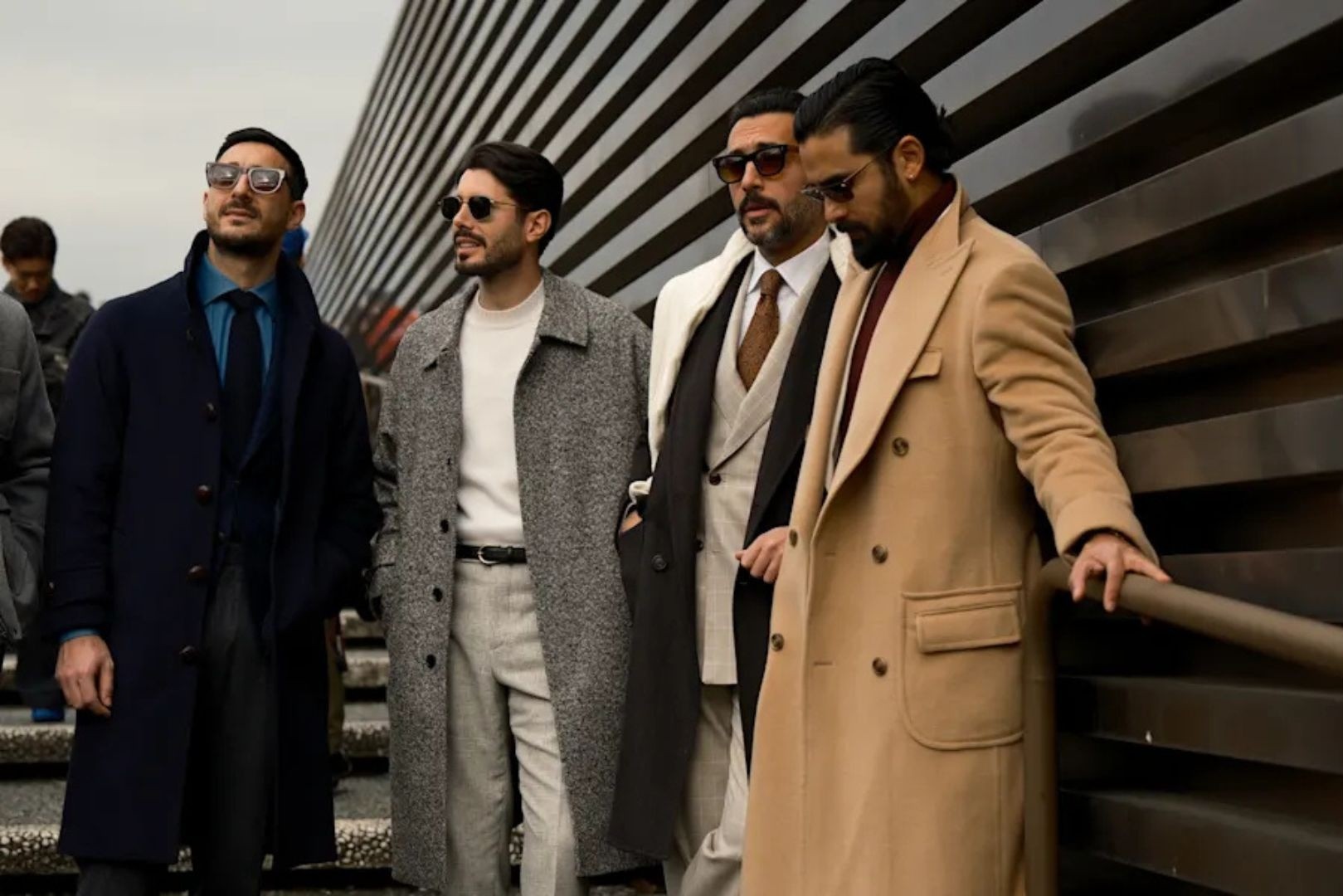
Outside the Fortezza da Basso, tailoring doesn’t whisper, it commands. At Pitti Uomo, a coat is never just a coat, it is intention and identity. While the fashion industry moves at a relentless pace, chasing trends that dissolve as quickly as they appear, Pitti remains anchored in something far more timeless, the language of cut, construction and personal style. Long before street style became commercialised, tailoring carried a quieter authority, one rooted in precision and power. It is a language long embedded in cultural memory, from the razor-sharp silhouettes of Peaky Blinders, where a coat was never simply worn, but wielded, to the present day, with Peaky Blinders: The Immortal Man reaffirming that same disciplined and deliberate control. At Pitti Uomo, this philosophy plays out in real time. The men gathered outside the Fortezza are not dressing for trend, but for presence, understanding that true tailoring does not seek attention, it commands it.
What is often dismissed as a spectacle at Pitti Uomo is, in reality, a study in discipline. There is nothing accidental about a perfectly weighted overcoat, the fall of a trouser, or the tension between texture, tone and fit. These are not costumes assembled for attention, but carefully constructed expressions of self, rooted in an understanding of tradition, where a coat is not simply worn, but understood. Italian ease meets British structure, softened by a distinctly modern refinement. It is this balance between heritage style and individuality that allows Pitti Uomo to remain relevant without ever appearing to chase relevance. Here, dressing well is not performative in the way social media demands, it is simply instinctive.
Unlike the staged machinery of fashion month, where collections are unveiled and trends are declared, Pitti Uomo operates in a quieter, more influential space, where not only what feels new, but what feels right, is observed. Before something becomes widespread, it often appears here first, shaped by those who understand it. Pitti Uomo does not announce itself loudly, but its influence is undeniable. What is seen, considered and quietly affirmed here has a way of carrying far beyond Florence, shaping how tailoring is ultimately worn.
And yet, the most compelling aspect of Pitti Uomo exists just outside the gates. The street itself becomes the stage, where those in attendance move between observer and participant. There is no set schedule, no formal seating plan, only a continuous exchange of glances, gestures and garments. It is here that tailoring becomes truly alive, removed from the confines of the showroom and grounded in the rhythm of everyday movement. A stride sets a coat into motion, its weight shifting with each step, while a trouser falls with precision, breaking perfectly at the shoe. These moments are subtle but intentional, revealing a commitment not to trend, but to the act of dressing oneself.
In an industry increasingly driven by immediacy, where visibility often outweighs depth, Pitti Uomo offers a rare sense of longevity. It reminds us that fashion, at its most powerful, is not about reinvention for the sake of novelty, but refinement, a continuous dialogue between past and present. Tailoring, in this context, becomes more than clothing. It becomes a language through which identity is both constructed and communicated. And while the restof the industry looks forward, searching for what comes next, Pitti Uomo remains grounded in what has always mattered, the enduring discipline of dressing with intention.
Imagery via Pitti Immagine Uomo.